
Hyaluronic Acid Injections
The aim is to replenish the fluid, restore lubrication, and improve the joint’s shock-absorbing capability
The aim is to replenish the fluid, restore lubrication, and improve the joint’s shock-absorbing capability
Hyaluronic Acid is a naturally occurring substance found throughout the human body. In joints, it is a key component of synovial fluid—the thick fluid that lubricates the joint and allows bones to glide smoothly against one another.
Hyaluronic acid performed two main functions:

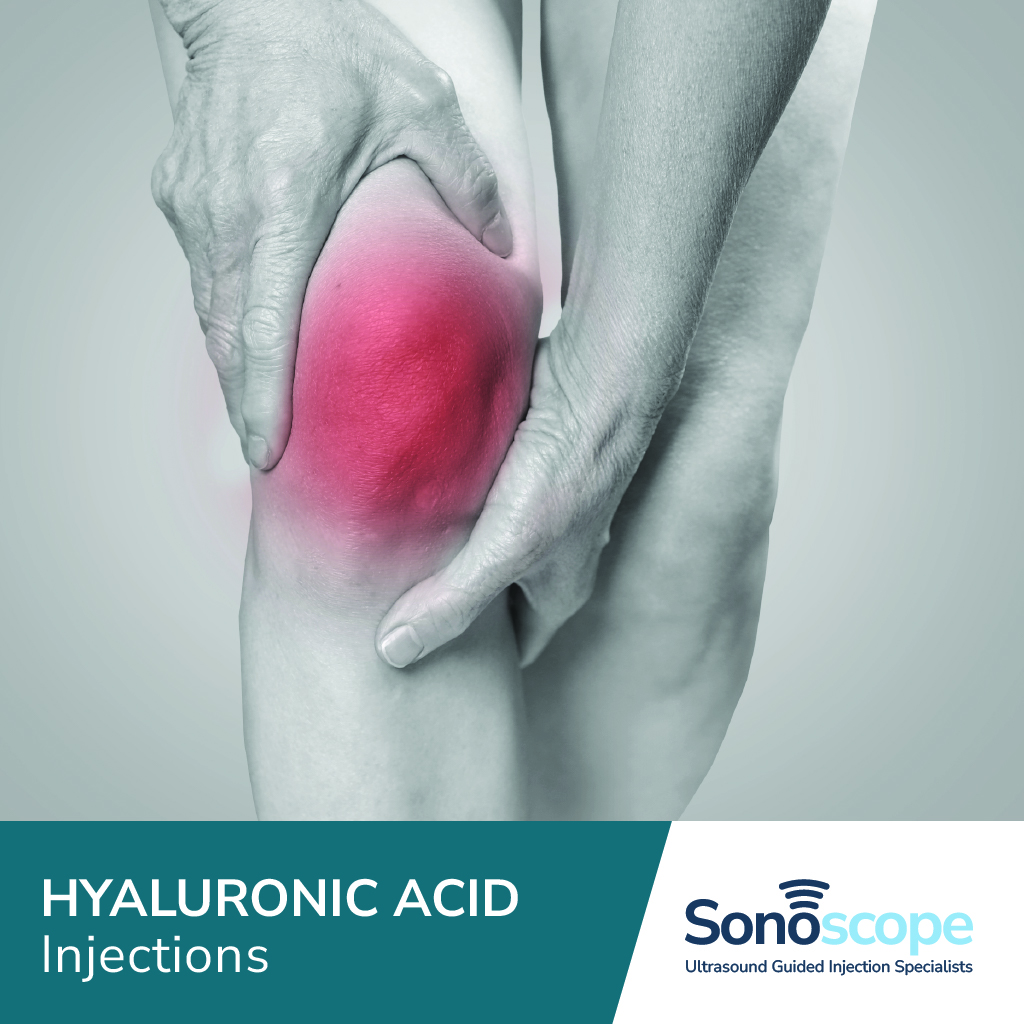
When a joint is osteoarthritic, the ability for it to produce high-quality hyaluronic acid is affected and the hyaluronic acid becomes less viscous and less able to facilitate shock absorption in the joint. This can lead to increased stiffness, pain, and inflammation.
The hyaluronic acid injection that is administered is sometimes referred to as Visco supplementation. The aim is to improve the lubrication within the joint and through this also improve shock absorption.
Hyaluronic acid injections targeted the mechanical function of the joint. This is in contrast to steroid injections which primarily address inflammation but do not have a role in the mechanical lubrication of the joint.
It is important to determine in advance by means of examination and diagnostic ultrasound whether hyaluronic acid injection would be the best option. As you can understand from the above, if the primary driver of the pain is thought to be inflammation rather than an issue with lubrication then steroid injection might be more appropriate. If however, it is thought that the mechanical function is significantly contributing to the pain, then a hyaluronic acid injection is often a good option. In some cases when there is a combination of both inflammation as well as mechanical dysfunction, a combination of steroid and hyaluronic acid might be the best option.
The key benefits that you might encounter following hyaluronic acid injections are: Improved mobility (improve lubrication often leads to a smoother joint motion), Protection of the joint: The hyaluronic gel within the knee functions as a shock absorber and reduce the mechanical stress on the joint.
Hyaluronic Acid injections are generally considered safe and well-tolerated. However, as with any medical intervention involving a needle, there are potential risks:
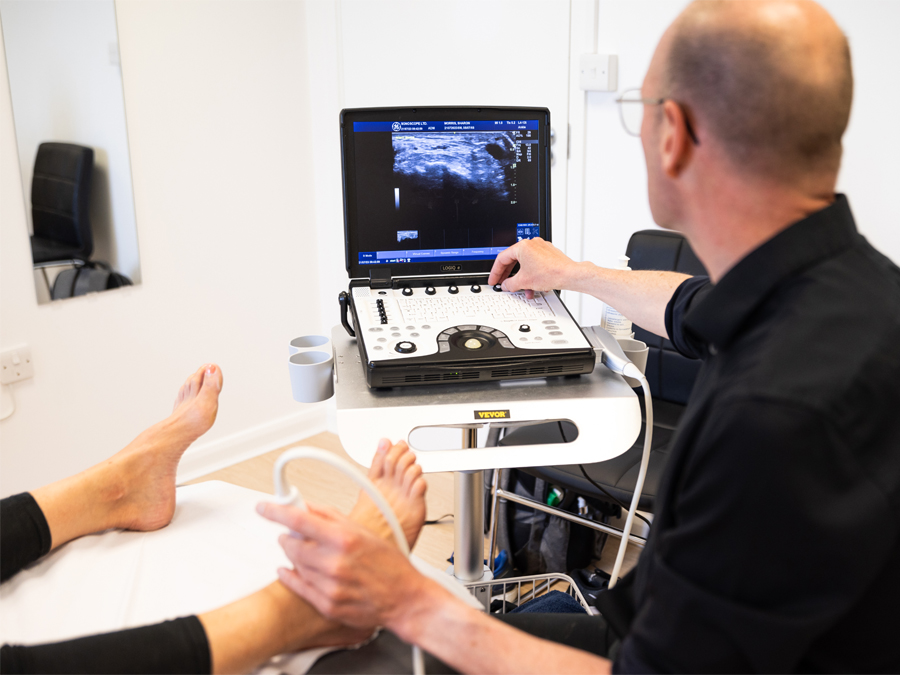
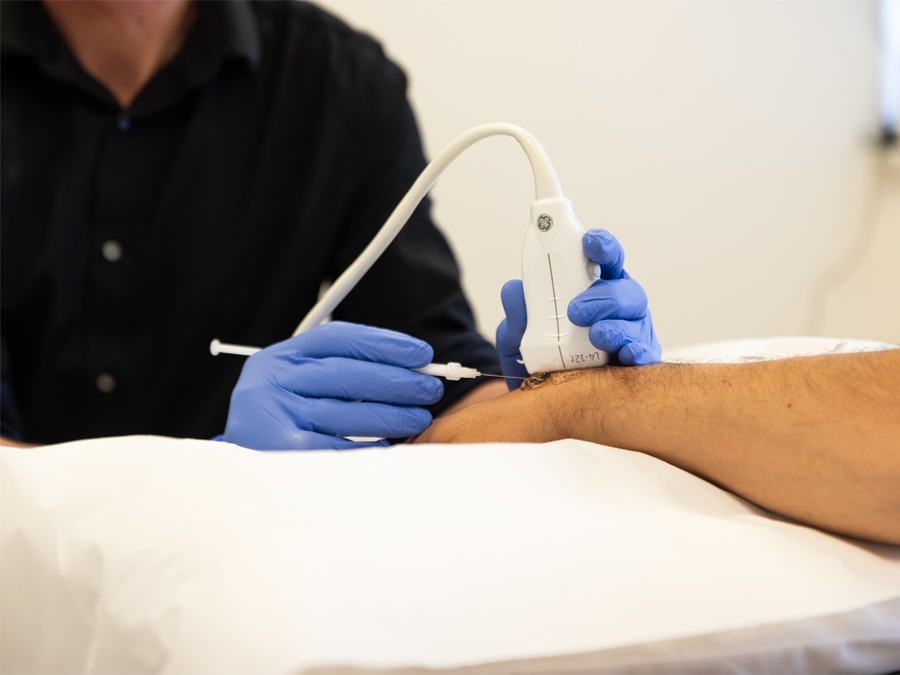
Ultrasound guidance ensures that the needle is visible during the injection procedure and can therefore be very accurately placed in the correct structure.
Performing an injection ultrasound guided generally reduces the discomfort of the procedure and increases the safety of the procedure as the needle can be very accurately steered avoiding injection of nerve or vascular structures. The accurate placement of the medication will also improve the effectiveness in many cases.
The body prior to being injected as to be exposed and therefore make sure you wear loose-fitting clothing allowing easy access to the body part that is to be injected.
You will be positioned comfortably on an examination plinth.
The skin will be thoroughly cleaned with antiseptic wipes. The ultrasound probe will also be thoroughly cleaned with appropriate cleaning fluid. The ultrasound probe with sterile gel would be used to visualize the target joint. The needle will then be introduced and guided into the structure under ultrasound guidance. Once the injection has been carried out. The needle is retracted, and a plaster is applied.
The usual advice is to rest the joint for 48 hours of post injection. You can do normal day-to-day activities but avoid any long -lasting and or intensive activities such as running and other high-impact activities.
If you experience pain, a postprocedural flareup (as described above) and just try to manage this with simple painkillers like paracetamol or ibuprofen.
Improvement is not immediate and can take several weeks to take full effect although some will find improvement much earlier than that. The benefit can last for many months Please also read the hyaluronic acid information leaflet on this website which gives more extensive information on hyaluronic acid injections.
Procedure information downloads and consent form.
Please click the button below to complete our clinical information and injection consent form before any treatment takes place.
Expert musculoskeletal specialists offering fast access, accurate diagnosis, and precise pain relief, trusted by patients across.