
Barbotage for Calcific Tendonitis
A condition where hard calcium deposits form within the tendons of the rotator cuff
A condition where hard calcium deposits form within the tendons of the rotator cuff
Barbotage (also known as percutaneous lavage or needling) is a minimally invasive procedure used to treat calcific tendonitis—a condition where hard calcium deposits form within the tendons of the rotator cuff, causing severe shoulder pain and limited movement.
Instead of surgery, this procedure uses a fine needle to break up the calcification and flush it out of the tendon, relieving pressure and pain.
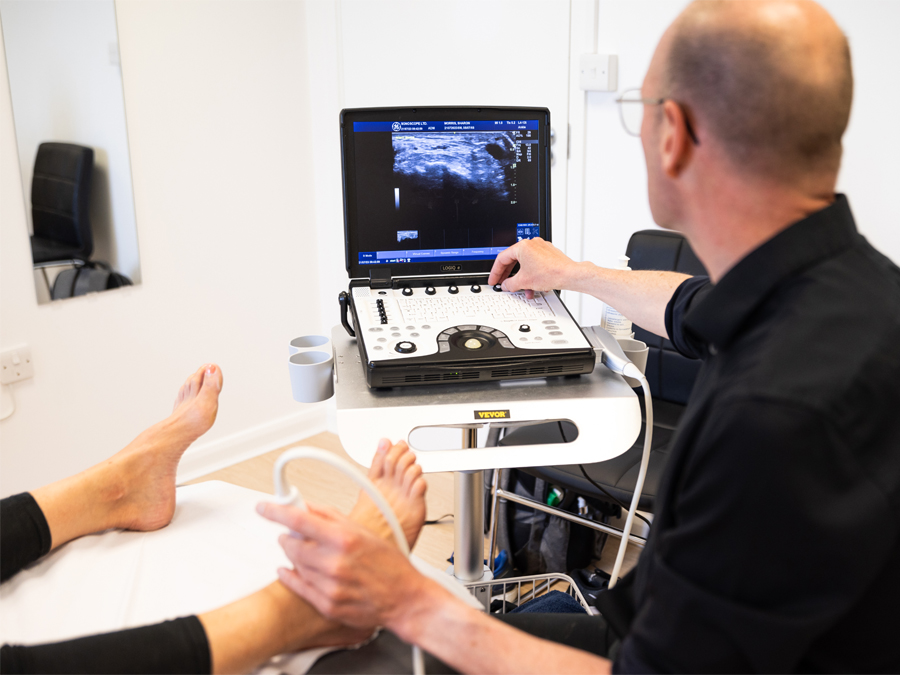
Performed under high-resolution Ultrasound Guidance.
The patient is seated or lying down comfortably. The radiologist or sports physician uses an ultrasound probe to locate the precise position and size of the calcium deposit. The skin is sterilised to prevent infections.
A local anaesthetic (such as lidocaine) is injected into the skin and the subacromial bursa (the fluid-filled sac above the tendon) to ensure the procedure is virtually painless.
Using real-time ultrasound imaging, a needle is guided directly into the calcium deposit. The operator watches the screen to ensure the needle enters the calcification without damaging surrounding healthy tissue.
This is the core of the procedure.
Once the calcium is removed, the needle is withdrawn slightly into the bursa, and a corticosteroid (strong anti-inflammatory) is usually injected to prevent post-procedure inflammation and pain.
A small plaster is applied. The arm may feel heavy due to anaesthetic, but this wears off in a few hours. Physiotherapy is usually recommended after a few days to restore a range of motion.
This is a minimally invasive procedure using a needle to target the calcific deposit, followed by fenestration of the deposit several times and then flushing the calcific material. The whole procedure usually takes ten to fifteen minutes and can be done without general anaesthetic, meaning it causes minimal damage to surrounding tissue.
Studies have shown this is an effective way to relieve pain for the longer term. As the calcification is removed, the range of motion of the shoulder tends to improve relatively rapidly once the procedure is finished.
Please click the button below to complete our clinical information and injection consent form before any treatment takes place.
Expert musculoskeletal specialists offering fast access, accurate diagnosis, and precise pain relief, trusted by patients across.